Uchechukwu Onyedikam is a Nigerian Poet/Photographer based in Lagos, Nigeria. BOTN, Pushcart Prize nominee. His poetry has appeared in Amsterdam Quarterly, Brittle Paper, Poetic Africa, Poetry Catalog, Sky Island Journal, Unlikely Stories Mark V, Spillwords, among other publications. He and Christina Chin has co-written and published two poetry chapbooks. He’s a contributor at Mad Swirl.
Last night I broke a rib kicking a balloon. I went flying like Home Alone, Marv and Harry, landed on my side and damn it hurt.
Sometime around sunset the following day I was at Miriam’s 80th birthday party, sat mostly alone at an oblong table, lacking the power to laugh.
The backroom of the restaurant overlooked the turnpike. Half her family stared out an endless window at an endless peel of traffic. The other half took turns briefly holding whoever’s baby.
The sprite-like server asked if I was all right.
In my own way I signaled, Not at all.
He brought more table wine.
I sipped non-dominant, explaining how I’d been wounded in battle the previous midnight, but neglecting to mention my opponent: a rubber bladder full of breath, color of bubble-gum, hovering low along the hardwood floor of the upstairs guest room.
How the house had shook and woken two sisters, two nieces, all the tetra, even the cherry barb.
The server left. The baby echoed all around.
Unable to dance or mingle, I watched Giada loom over an elderly man at table five. I saw how she was disguising her hatred, making what appeared to be pleasant small talk, though he was a known-enemy, a pink-faced gentleman-fuck in a baby blue suit and teal tie. She was nodding. Was smiling cool even.
We’d been married eleven-and-a-quarter years. I’d studied and was fluent in her many gifts.
I, in fact, was one of her gifts.
Another of her gifts was ‘forever-patience.’
Another was ‘resting angel face.’
Then there was her ability to conceal absolute repulsion.
Who could ever guess, during the car ride over, Giada had instructed me to slowly choke the life from this bloviating man.
His exact relation was unclear.
Her father’s first cousin? Second cousin? Third cousin? Forth cousin? No cousin at all? Luca. Former dean of colleges, retired fifteen years but the way he bragged about campus, you’d never know.
Maybe she would snap, fetch up the potted tiger lily centerpiece, and brain him.
A silver mylar balloon struck the ceiling fan but my table mate bopped it away with an unconcerned backhand.
Gold foil on the balloon read “80?!”
And Miriam? Perhaps Miriam was a great aunt?
I had no clue, except I loved Miriam, wanted her cloned two thousand times. A moment before I had seen the bartender letting the baby pull ice cubes from the bucket. But Miriam had objected. Now Miriam was rocking the mystery baby. Giada’s family had conquered this backroom with toasts, and gossip, and four courses of food already. Espresso was brewing. I limped to the remainder cocktail shrimp.
Not two minutes later, someone tapped my shoulder. I turned, expecting to be offered a pig in a blanket—not so—another server bestowed upon me the baby.
“I’m hurt,” I said, indicating my side.
Big Nico saved me, took the young one and spoke in his low baritone, “Who’s your daddy? Who’s your daddy?” Our world was built of questions, posed to those who lacked the ability to speak. “No, really. Who’s your daddy?” He gently shook this baby over his head. “Is there a daddy in the house?” Big Nico asked like someone might say, ‘Is there a doctor in the house,’ just a moment before an emergency tracheotomy.
I studied a poster board full of photos of Miriam as a child in Passaic and Miriam as a teenager in Passaic and then Miriam as an adult after she’d gotten herself waylaid in Salt Lake City.
The photos on the poster board I liked best, twenty or so, captured a gnawed-away time when she was young, in New Jersey, just after WWII, when everything was sepia dew and sepia roses.
One of those sepia photos on that pasteboard was of this building I stood in now, which Giada’s family used to own. For six years they’d owned it, I think.
First the building contained a hat store that also sold shoes. Then it was a shoe store that had some hats. Then they sold no hats. Briefly after the family lost the building, imitation diamonds were sold here. After that, it became a pawn shop. Then there was white flight and nearly it was demolished. Yet here we all were, knee-deep in bruschetta, faux bouquets, and Dean Martin—the place now called Friar Anthony’s.
Two of the other twenty photos were especially striking, bloomed with life, belonged on a gallery wall.
One of these special photos was labeled “1964 M” She was twenty-four and wearing a white dress, stood in front of a plaster wall painted evergreen. She was wearing a halo. Either it was Halloween or Noel.
In the other photo, everything had an orange tint and she was getting a haircut from a much older man with a cigarette hanging out of his mouth. The collar on his flannel shirt popped. She had on a tight sweater, navy blue, with gold zigzags.
“That’s me,” Miriam said over my shoulder. I turned and introduced myself. Said ‘Happy Birthday’ again. She reached for my hand. I gave her a shake against my better judgement and nearly cried. She’d come all the way from the other side of America—Utah—to be exact, as if on a farewell tour.
“These two photos are really good.”
She didn’t get me. “A swell camera.”
“Who is the man?”
“My father, Little Nico. He used to hide money all over the house. When he died, my brother Nico—Big Nico—got the house. When he finally sold, well you know, they tore down that house.”
“No I didn’t know.” I was upset to hear this but not surprised. I’d loved that house.
“They tear down everything. They’ve got to keep the bulldozers busy. But with all that junk Nico had put in there, I can understand. We had to clean it out in a hurry just so they could level it.”
“That was some good junk though.”
“Sure it was. We’d be giving away an old dresser and hoping it didn’t have money hidden in it.”
“I lived in that house for a month.”
“When was this?”
“Ten years ago.”
“I loved that house. You lived there? I’d say a hundred people lived there. Open door policy. At one point the mailman lived there.”
“I’m Giada’s husband,” I said. I pointed to one of the photos of the house, trashed to the max. “Is that 2012?”
“Maybe I met you. You were thinner?”
“For sure.”
“What a lightning rod for garbage. And we’d have to worry there is money hidden in everything. That’s how our dad was. There were all these pill bottles. The other day I opened a bottle of nickels.”
“When did he die?”
“1992. No. 1993.”
I glanced down at Miriam’s feet. She had on neon running shoes under, maybe, her fanciest dress.
“1994. June the ninth. Dad played the lottery every day. When he died we filled up the coffin with empty cigarette packs and losing lottery tickets. Everyone saw that and smiled. Buried him with two Marlboros, a red, and a lite, one in each corner of his mouth.”
I gave Giada a wave she didn’t see.
The servers in their purple vests and purple shoes, handsome parts in slicked hair, wheeled out dessert. The sun was at the perfect angle to blind us all.
Some hero shut the curtain. The room dimmed into comfortable shadow. There wasn’t a single light on. I leaned in closer to the poster board, looking again at those two, specifically striking photos. I realized all my pain had gone poof.
I pointed to the angel and the haircut.
“Who snapped these?”
“Oh, that would have had to be our older brother. Luca.” She pointed out the man my wife wanted me to strangle. The man Giada was still talking to, still being civil to.
“He carried that Nikon everywhere.”
“I really love those two photos of you,” I said.
Miriam hugged me and gave my neck a little peck.
I went back to my table and sat down with espresso and tiramisu. Giada had floated over to her mother and father and now, to the baby’s delight, her father sang a novelty folk song urging Christopher Columbus to turn the boat around.
The Marine across from me consumed candy crush. His red-headed daughter poked him in the gut, spoke more about a carnival soon happening on the cliffs. The seat where the mother had been was vacant.
I looked back at Luca sat all alone. I thought again about his photos. He looked so lonely. Where was his camera now? I didn’t want to kill him anymore.
If his sister was 80 and he was the older brother, that would have made him at least 82. I’d met him fifteen years earlier. At a different reunion barbecue.
He was always saying evil things at barbecues. At one legendary bicentennial barbecue, he may have told Giada’s mother she needed plastic surgery.
The barbecue I’d been to, he said something nasty to Giada even, but what?
Oh I couldn’t recall even that.
Can you be irrationally mad at something not worth remembering? Let’s see. I picked up my plate and cup and sat down at the table across from Luca.
“Hello,” he said.
“Luca, you don’t know me.”
He was barely looking. “I know all about you.”
“I just wanted to tell you—”
“Save your breath. I used to believe in radical honesty at your age. It’s a waste.”
He ate some of his cake. I ate some of mine.
“What should I apologize for?” he asked.
I looked across the restaurant, Giada was talking to a woman in a skyblue gown. The missing mother?
“You’re right, forget it. I heard you took those two photos that I like over there. So I forgive you, as an artist.”
He smiled. “Good. You’ve seen the light. And so have I. Isn’t that photo of Miriam and my father so funny? Who ever saw a father cut his daughter’s hair? But that’s the kind of man he was. He would take apart the TV set just to see how it worked and he would put it back together. No formal training. No education. But he’d wear a tie, hovering over the open hood of a car, changing spark plugs, pulling on wires. He’d guess and he’d be right. Me, and you, we’d be hopeless.”
“Your father had innate talent.”
“When the priest would drop by he would be lying on the couch reading the paper and Miriam would let him in the house but Dad wouldn’t even get up. He didn’t make a big deal of ceremony and he thought a lot of people were terrible kissasses. Anyway, I was a nerd. I had a camera. That priest gave it to me. I took lots of photos.”
The restaurant was louder now. The drunks had had their rocket fuel. Voices swelled. Faces grew younger. And there was Miriam sat under her throne of balloons, shoulder-to-shoulder with Nico. He was red-faced and blockheaded, and whispering something that doubled Miriam over in laughter. I guessed, at this pace, she’d live another eighty years.
One thing I remembered about Nico was that he put newspaper down and let his three-year-old-totally-healthy dog, shit in his house. Never once did I see or hear him yell at that dog. Though there was a doggie door, the dog preferred to shit in the house. And in the mornings before work, I’d step out of that dog-shit-reeking house, to my car and see Nico had hundreds of pounds of bulk garbage tied with twine to the roof of his Ford Taurus, which he’d gathered in the dark. So I’d untie it all and put it there amongst all his other nightly winnings. Every year he used to have a yard sale in the summer and sell the town back its trash.
But as you already know, the house is gone, and so is the dog, not to mention, nearly everything else.
I heard a balloon pop under the table.
I bent down in terrible agony.
The baby was crying but nobody else noticed. He’d curled up in a little ball, his mouth full of silver mylar.
I reached out my good arm but the baby scurried away. Now was sucking his thumb amid all this clatter and chatter. He pulled his thumb out and the string of the popped balloon was wrapped around his thumb.
The baby drooled loose the rest of the choking hazard and smiled.
“Whose kid is this under the table?”
Up above, Luca was summarizing an important commencement speech he’d heard given every Spring for the entirety of his adult life.
I called for help again.
Nobody seemed to hear.
I held out my plate. The baby crawled over and began to scoop handfuls of cake into his brand new mouth.
Bud Smith is the author of the novel, Teenager, among others. He lives in Jersey City.
I went on a gameshow but didn’t win. Instead, spectacularly lost. They said I sucked. That I should never have been born. They’re probably right. I went home and found my wife having sex with the gameshow host. Somehow, she had beat me home. The gameshow host you’ll remember as the beautiful model of the late 90s, Brooke Teal. This makes sense, I thought. My wife said leave. Brooke Teal laughed. I closed the door behind me, carrying with me my old-fashioned lamp handed down from my Polish grandfather. It’s of a boozy-sad hobo who looks suspiciously like Charlie Chaplin. Above him, where the lamp’s bulb burns dim, it says, “GENIUS AT WORK.”
To Nobody
I was dead for five hundred years and came back at the wrong possible time. My postman came through the yard, with a letter which, when opened in private, told me I had missed everything. “Missed what?” I said out loud, to nobody. Everybody I had known had long since died. My beloved dog, Hamstring; my mother who knew every knot in the book; my grandfather—but he had been dead since before I was born. Then one day I was shaken from the seduction of an afternoon nap by a phone call. “Hello, but there’s been a big mistake,” said the voice on the other end. “Mistake? What mistake?” I said. But then I could hear the neighbors outside, doing their marches in the yard. They were practicing for a reckoning. I couldn’t relate it to anything. There was no precedent. The only thing I remember from my previous life is what Debussy said. He said to the singers in his opera, “First of all, ladies and gentlemen, you must forget that you are singers.”
Class Clown At Our Lady Of Perpetual Sorrow
I was unfairly punished many times as a student at Our Lady of Perpetual Sorrow.
It was usually because I was pranking someone. Usually because I was pranking Old Garf. Garf was the runt of his prestigious, sprawling family. Anchored by everything you could be anchored by at twelve years old. Horrible youth for Poor Old Garf.
I’d call him up numerous times, pretending to be a doctor or police officer and having to inform him of his parents’ demise, usually in some ill-fated excursion or random chance encounter of morbid violence. I was excellent at making them up! My imagination was like a knife. Everything around me, the butter.
And poor Old Garf, every time, on the other end of the phone, sobbing like an alley cat with nobody to push away. Old Garf, always believing me.
So, you see what I mean? Unfairly punished. Unjustly! Garf believing the same story (or variation of the story). Imbecilic! Dunce! Old Garf… I can’t stay mad at him. After all these years… You’ve heard about him no doubt, very recently, in the news. Having achieved the highest status in some acronymed company that has great influence over public policy.
Shane Kowalski lives in Pennsylvania, where he teaches creative writing at Ursinus College. He’s the author of Small Moods (Future Tense Books).
On Friday night, I drove out to the Wickens family farm to listen to my wife’s hardcore band play a show inside the barn at the edge of the woods. The barn stood sheathed in a thick crust of shimmering obsidian paint. A common nighthawk wearing a tiny leather jacket perched on a post just outside the door. It was April. I had quit my job at Wal-Mart over a year ago. My wife said she was fine with this, but I wasn’t sure. She had never been very good at expressing her true emotions.
Inside, the barn was empty of animals and people and fences and hay. A carpet of soft dirt covered the cool floor. My wife slammed on her drum set in a rapturous thrall. The sound of her drumming was deafening. The concussive force of her kick drum rammed into my ribs like a right hook. Runnels of gleaming sweat forked down my wife’s luxurious neck. She wore nothing but the expensive purple lingerie I had purchased for her thirty-sixth birthday last month. Stepping into her line of sight, I held up my hand and waved to her in adoration. She stared at my shins for thirty-one seconds. She did not smile at me or acknowledge my presence. She played her 9/8 drum patterns and stared at the lead singer’s ass for the next hour. So I peeled off my clothes and lay on my back in the nude. I grabbed fistfuls of loose dirt and smeared brown streaks of mud across my thighs. I stared at the mossy cobwebs clinging to the corners of the gambrel roof. I pushed my pinkies into my ears until forks of sticky blood began to flow.
Steve Gergley is the author of four books. His most recent novel, Episode 3328: Ian Sharp, was published in January of 2025 by Translucent Eyes Press. His short fiction has appeared or is forthcoming in Wigleaf, X-R-A-Y Literary Magazine, Maudlin House, Passages North, Always Crashing, and others. He tweets @GergleySteve. His fiction can be found at: https://stevegergleyauthor.wordpress.com/. In addition to his own writing, he is also the editor of scaffold literary magazine.
In the end there was nothing worth staying for. I left LA on bad terms. I’d burnt bridges, accrued social debts, and alienated myself from whoever tried to comfort me whilst grieving. I was a drunken arsonist, scorning those once dear to me when six feet deep in liquor. I had some girls for comfort. None of them knew about each other, until they did. I had some friends, until I told them to fuck off. All this accumulated into LA becoming one big hell after Laruen died.
I lived in a small apartment. It was in the old spanish style and decorated with movie posters from a lost Hollywood. I moved there after college to be a screenwriter. I did that. Or, I tried that. I wrote a screenplay about an all female death metal band struggling to make a decision about whether to sell out or not when offered a record deal that mandated them a makeover. Lauren was cast as the lead singer.
The movie did okay. It led to other conversations about other scripts that I’d promised to make. Scripts I tried to write and failed to finish. Meanwhile, Lauren auditioned for overdubbed car commercials and background gigs for b-rate reality shows. She was cast as ASIAN WOMAN ON CELL PHONE 1. Implying there was another Asian woman talking on a cell phone in the background as some spray-tanned wop monologues about his troubled dating life.
It was at an afterparty for the show where Lauren’s heart stopped. Bad blow. A Grand Mal seizure. There are videos readily accessible on behalf of the audience’s presumption she was faking it for attention. Apparently there were a handful of celebrities at the party. A-grades like Bradley Cooper who were featured briefly on the show making sardonic commentary upon the stars’ attempts to find love in an admittedly disembodied LA. I have only watched one once. That was more than enough. And so came the months of grief, and thus passed my life as I’d known it. No longer did I think about movies, writing, art.
I sold off most of my possessions. I booked a plane ticket to New York without plans of where to go upon arrival. I knew nothing of how I’d live. All I knew was I wanted out.
This brings me to now, the morning of my move. In LAX with a backpack filled with nearly meaningless memorabilia of my 20’s, and a suitcase filled with clothes, unseasonably light, considering my wintery destination.
In front of me there’s a family of four arguing about who’s gonna sit in the aisle seats, who’s gonna be in the middle, who’s gonna be the ‘pariah’ left to share a coupled row with a stranger. The kids argue with severity. The father looks indifferent, the mother too. The son and daughter force their way to agreement that they will both sit in the aisle seats. I feel vaguely relieved that at least some people get what they want in this world. Or at least know where they belong.
For a moment I have direction. The tall security guard rushes me forward in line and tells me to have my passport ready. I pull it from my pocket, hold it in my hand as I move up. My ticket is scanned and I file forward in a bureaucratic and soulless fashion.
On the plane I sit alone. Normally I would be happy about this, but today it fills me with a particular dread. The prospect of leg room does not particularly suffice for the comfort another soul could bring right now
I consider the superficiality of my being. I have nothing: no great work to show for my thirty odd years on earth. No deep connection with family. No friends. No depth. I have managed to live lightly. Skimming seconds until they turn to days. I watch LA grow distant below me. The morning sun is sepia. The interiority of my plane is gray.
I unlock my phone to put on music. The plane drops violently in altitude. A baby starts crying. I drop my phone on the ground and it slides to the row behind me. The drop feels like getting punched in the gut. I stare down at my shoes as our bird takes its thrashing. I’m wearing black monk straps. I suddenly realize how unfashionable, ugly, and untimely my choice in footwear is.The plane shakes. I feel a tap on my shoulder, the man in row behind me speaks in a calm, high voice, says “this yours?” and hands me my phone.
The plane begins to drop in steps as if drunkenly stumbling down a flight of stairs. I attempt prayer. I yearn for the grace of stable religiosity. My bladder threatens to scream and my stomach hums baritone. I yelp at the sound of a huge tin trash can getting kicked. A dip in elevation. A flicker in light. A lack of control. I feel the closing of an imminent future. My bladder folds. Passengers scream. The overhead compartments throw up Rimowa. Film photos of me on a seesaw. The feeling of saltwater in my eyes. The smell of spring rain. The innocent nausea of a merry-go-round. The first memory of a hand tucked in mine. The blackness of sleep.
Everything grew alright by seconds spent away from daylight. It was silent, not like sleep but rather the soft erosion of sense following shock. It was the feeling of being weightlessly held. A gentle suggestion of guided continuance. Something like hope.
“Are you alright?” the man says to me as I come to, opening my eyes and staring at his face. It’s pale. Bearded thickly. He has a long, thin nose, and rimless glasses. Two long curls spurting out of his temples.
“I think I might be dead,” I say to him. He is standing in the aisle, leaning in to eye level. He smells of a faint menthol.
“My boy, you only fainted, you are alive and well.” His w possesses a slight v. “vwell,” he says. I stare into the faint blue of his eyes, and ask as a child appeals to anything above him “will you sit next to me . . . I am scared . . . I am scared I am going to die . . .I am scared I am going to die and I have nothing.”
He laughs, I scooch over and he slides into the seat beside me. Takes my hand and looks me in the eye. “You are wrong, you have everything. You have me. You have your hands, you have your eyes, your ears, your nose and your hair. Tell me—do you believe in God?”
“I don’t know.” I say grabbing his hand back. “I don’t ever think about it.”
He looks deeper. “Wvell, do you think about yourself?”
“Yes. Almost exclusively.”
“Well then you think about God.It’s banal. Everyone says it. But In Judaism, God is Ein Sof. Infinite. Meaning you, that that, is you too. Meaning God makes up all that surrounds us— given the belief that God is the origin of all existence. To really think about anything, to not only think about God, but to know him as well as man can, to be close to him.”
“I have no clue what that means. I’m not smart anymore. And I think I pissed my pants.”
“Tzimtzum. The contraction of God’s infinite light to allow the creation of the universe. It left space for God to be everywhere. The withdrawal of God leaves space for your mind. For all of us to be, and to be singular. Thus we take his place as the embodied gods of everything around us.”
“Everything around us?”
He smiles big “Everything. Everything like the clouds. Everything like grass. Everything like ants. God went far away to somewhere we can’t understand to allow everything to be its own divinity.”
“I have God too?”
“You couldn’t not have God if you tried.”
“I’ve tried.”
The Flight mellows. The stewardess serves drinks. We both take gin. I tell him my mother was Jewish. He says he could tell. I ask how and he says it’s something you just come to know. I take another Gin and fall asleep on Levi’s shoulder. In my dream I wear converse and a big felt hat. I’m dancing with men in long black coats singing in a language I don’t know. I have children. They aren’t there but I know I have them. A wife too. Her face is a feeling I have in my heart and not an image.
I awake upon dissension, carrying the dream like a lungful of breath. Heart pounding. Perspiring, right there beside Levi. Our declination is smooth, the bright city below draws close like clouds. Wind. Inside me Levi claims is everything: Lauren is alive. My friends are a part of it too, my family, my everything.
As the plane touches down, people begin to cheer. I feel second-hand embarrassment. I am them too. They are me. I follow Levi down the aisle. Out of the plane and into the airport. JFK is busy. I begin to lose him in the crowd. I follow the tail of his greatcoat through peripheral glances split between traveling bodies. I stay on him, into baggage claim, where he is received by a group of men dressed just like him. They take him warmly.
I think of yelling his name. And then I don’t. I watch him exit the building. He minimizes into a black fleck as he draws deeper into the mouthlike opening of the short term parking lot. I know he doesn’t look back because what he wanted has already happened. I want what he wants. To bring me close to something real. Something we will continue to share foreverlong. This empty space God once breathed life into, the freedom of blank paper. White walls, Fluorescent light. Freedom to be the same but entirely different.
A young woman comes up to me and asks “do you know which carousell has the bags from LAX?”
“I don’t.” And as I say that, they start to fall from the shoot onto the black conveyor belt.
“It’s alright.” she says, “I see it, it’s just starting to begin.”
And as I watch the bags circle around, I think to myself, it’s just starting to begin.
Maxfield Francis Goldman is a 22-year-old author from Upstate New York.
Bill Whitten is a husband and father of two wonderful boys in St Louis where he spends 15 minutes at a time recording entire albums all by himself. He also finds the time to write and send it to us to publish. Go find his music and buy it; from St Johnny to Grand Mal to William Carlos Whitten. He also makes youtube videos. An amazing talent. Black Mystic Speed by WIlliam Carlos Whitten
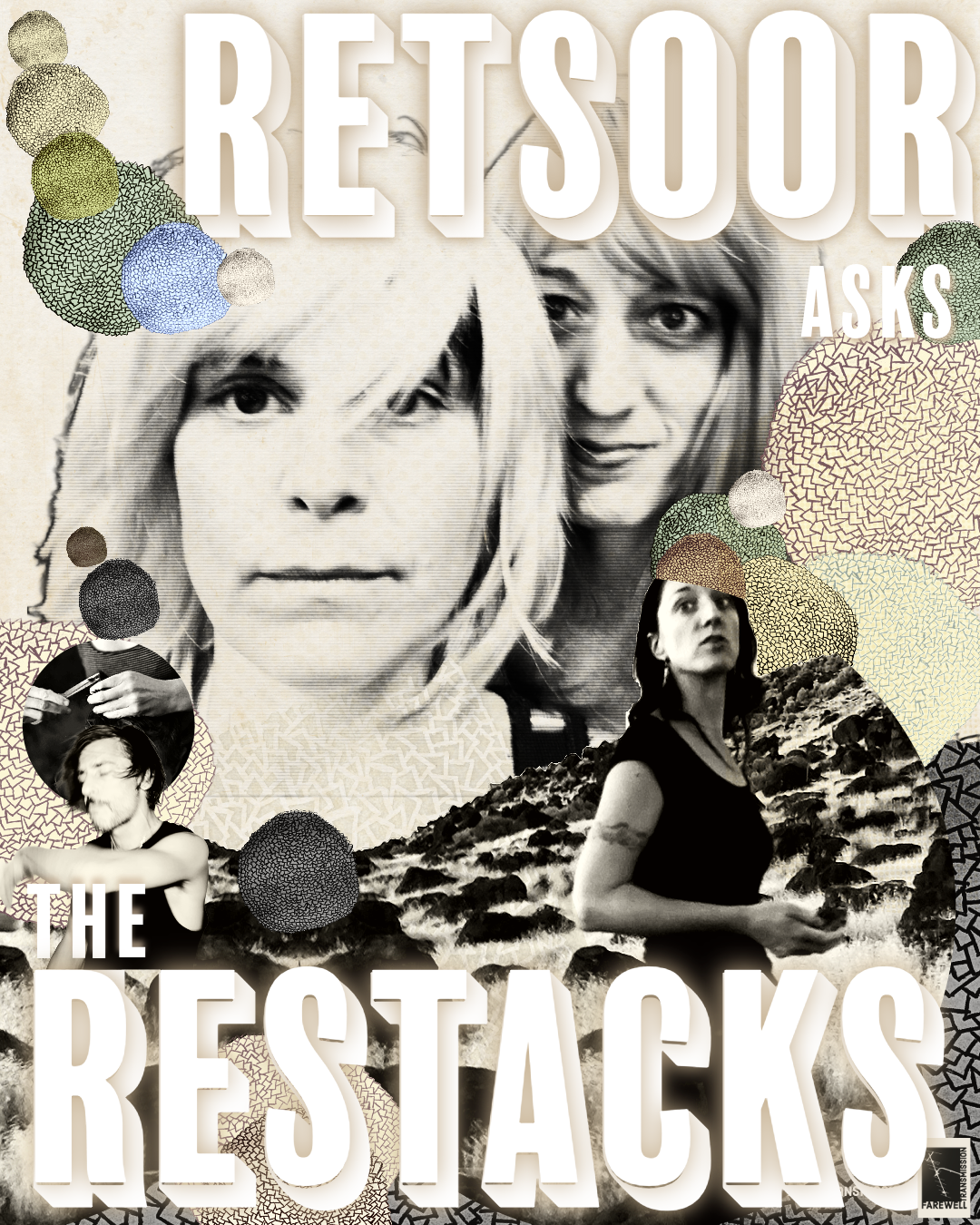
I first saw the name Max Hipp in 2019 when I read his story THE LEAST FUCKED UP PEOPLE in Smokelong Quarterly. I enjoyed it very much so I was pleased to cross paths with him in a Bud Smith writing workshop during the winter of 2020-21. This was right around the time the first COVID vaccines were rolling out to the most vulnerable and politicians. Every Wednesday night I’d go down to my wood-paneled basement, tap a link, and stare at a panel of eight tired faces that would keep me somewhat sane for three hours.
AT: Do you remember in Bud’s workshop, how we’d have to write those little letters at the end of each person’s piece to sum up our thoughts? I was one of three to be workshopped that first week. I’d sent everyone two or three chapters of a children’s detective novel. When I read through the letters afterward, most were complementary and mentioned how the story reminded them of stuff they read as kids. But when I got to your feedback, you hadn’t written anything. I was like, WTF? Does Max not understand the rules? Did he hate my shit so much he didn’t think it was worth a note? Was his opinion so brutal he didn’t have the heart to tell me? And what the hell kind of pseudonym is Max Hipp, anyway? Fine, whatever. I could take it. Besides, it was your turn to sub the following week. Maybe I wouldn’t feel the urge to write you a note either. I’m no clairvoyant, I can’t see the future. But that didn’t happen. When I received your offering and opened the doc I saw the title CLIFF BURTON RULES and thought, Oh shit. Growing up, Cliff era Metallica was my favorite. Not only did you use my favorite musician in a story, but the story itself spoke to my upbringing and the upbringing of many kids who got into thrash metal in the ‘80s. You made me a solid fan of your work with that story, and I’m really happy to see it in a published collection.
MH: First off, let me apologize for being such a thoughtless jerk about your chapters! You’re right that I literally didn’t understand the rules in that workshop, or knew there were rules. I’ve noticed that if someone gives me directions on how to do something, anything, I will immediately misunderstand those directions. Also those chapters were flawless and great and I didn’t have anything to add and was thinking I could praise your flawless chapters “in person” over Zoom with my face and ridiculous pseudonym and all.
With that story, I wanted to get the feel of what The Satanic Panic in the 1980s (and early ‘90s in Mississippi; southern lag time) felt like, and how dangerous and wild and fun Metallica seemed back before they became a corporation. In the story, it’s 1994 and Sammy, the main character who’s born too late, wants to start his own band and be like Metallica. He feels like those guys are his brothers, which was common back then, when all you knew about a thrash band came from magazines and liner notes. They were the most beloved metal band on Earth because their tapes were traded one dubbed cassette at a time, through snail mail and across the seas to every continent. They took over the world that way. Anybody who saw them live in the 1980s on any of those stadium tours knew they were special, even peers like Slayer and Anthrax. A lot of that specialness was Cliff Burton. I’m glad some of that was hitting for you. It’s one of my favorites in the collection.
How were you introduced to ‘80s thrash metal and what was the first band/album you remember getting into?
It was Metallica. I hadn’t heard anything by them until around 1989 when I got a dubbed copy of …And Justice for All from my cousin. I’d never heard anything like it. I was still stuck in the literal with lyrics, so when Hetfield sang “See our mother put to death,” I was envisioning my own mother, which scared me. I didn’t have cool older brothers to show me punk rock or anything edgy and I was pretty isolated other than whatever I gleaned from MTV and middle school. Metallica famously didn’t make videos until the “One” video, but I didn’t see it until we rented it from the video store. After that, the floodgates opened. I realized the people I knew who wore those black t-shirts already listened to this band religiously, and pretty soon all the Testament and Megadeth patches on all the denim jackets made sense.
I was similarly affected by the “See our mother put to death” lyric. Justice is a heavy album, even by comparison to the previous three. Of course, everyone mentions the lack of bass on that album, the first without Cliff. Do you have any particular feelings regarding the bass being nearly inaudible in the mix?
I used to have more feelings about the lack of bass. Clearly, the sound of the record didn’t hurt Metallica whatsoever. They just got bigger. As someone who actually listens for bass guitar, though, it makes the album not hold up as well for me, but the sound of that album, that freeze-dried tightness, changed the way thrash sounded for the next few years.
I’m okay with the low bass on Justice now. I think of its absence as a sort of tribute to Cliff. But if I was Newsted I’d be fucking pissed. Since Justice was your first Metallica album, what was your introduction to Cliff Burton?
Probably listening to Ride the Lightning on the school bus with friends. And then watching Cliff ‘Em All on the VCR.
I don’t know if you’re aware your book came out forty-one years to the day of Dave Mustaine’s final gig with Metallica on April 9, 1983. Ultimately, I think the personnel change was positive because we got Megadeth as a result, and an entertaining decades-long rivalry. As a guitar player yourself, do you have a preference between Dave and his replacement, Kirk Hammet? And how do you feel about wah pedals?
Ha! I had no idea when Mustaine’s last gig with them was, but I’m glad it was the book’s pub date. I like both of those guitar players. To me, choosing one would be like preferring a Phillips-head screwdriver to a flathead–depends on what you need it for. I like wah pedals for weird noise and tone purposes. It’s hard to make that effect sound new, or make it serve the song, so I have a lot of respect for folks who don’t just wacka-wacka with it. Sometimes you just have to put the wah away, step away from the wah.
You mentioned The Satanic Panic of the ‘80s. For me, growing up in the northeast, listening to metal and adopting the image drew some stares and occasional comments about devil worship. What was it like in Mississippi during that time? In my mind, your area is a lot more conservative, religious, and generally up in everyone else’s business. You’re not far from Arkansas where, in 1994 (the same year CLIFF BURTON RULES takes place) the West Memphis Three were convicted of murdering three little kids in a satanic ritual, the only evidence against them being the heavy metal they listened to.
Yes, the West Memphis Three stuff happened about an hour-and-a-half from me. My friends and I could’ve been those three metal kids who were wrongly convicted, the victims of satanic panic mixed with shoddy police work. Down here, wearing the metal shirts and growing out your hair made people scared of you, a kind of protection against bullying. It also made you a target for police, though, since they assumed you had drugs.
Did you have drugs?
Me? No sir, officer.
Have you watched season 4 of Stranger Things? The Satanic Panic played a big part in the plot (I read that the character of Eddie Munson was based on Damien Echols of the WM3), not only with metal but Dungeons & Dragons, which has also made its way into your stories. Did you play a lot of D&D as a kid?
Yes, I’ve seen all the Stranger Things episodes. I didn’t know anyone that played D&D until I was fifteen or so. When I was young, I thought I was too cool for it, like D&D players were nerds and I wasn’t, but I got into it during the 2020-21 leg of the COVID pandemic, playing on Zoom with old friends. We played every week, sometimes twice a week, for over a year.
Have you ever played a record backwards?
As much as I’ve always wanted to, no. Is there still time? Any particular ones I should try first?
It’s never too late to get possessed by the devil.
What was the first guitar and amp you owned? What do you use now?
The guitar and amp were both Peaveys, made in Mississippi. Now I’ve got a Fender Vibrolux as a main amp, and too many guitars. But I use them all, so it’s not an addiction, right?
Do you remember the first metal riff you learned?
It was probably “Seek and Destroy.”
Do you recall the name of your first band?
High Voltage. We liked AC/DC but couldn’t figure out a way to sound like them. We would write songs and record them live on a jambox, with whoever was singing standing close to the built-in mic so we could hear the lyrics.
Did you have a favorite band t-shirt growing up?
I always loved those Pushead Metallica shirts but sadly never owned one. My mom and stepdad wouldn’t have let me wear something like that and would’ve freaked out, exactly why I wanted one.
So your mom and stepdad weren’t supportive of your evil musical tastes. Did they forbid you from going to concerts or buying certain albums? Did they send you to a de-metaling program like in The Decline of Western Civilization II: The Metal Years? Have you seen that doc?
I definitely rented that movie from the video store back in the day. No one put me through a de-metaling program, but those scams were widely available where I lived. And talking about childhood, let me put it this way: it was clear that things would go more smoothly if I listened to the heavier cassette tapes only on my Walkman.
Seeing as you avoided t-shirts, would I be correct to assume you didn’t hang posters of metal bands in your room? What did teenage Max’s room look like?
Correct. Posters and thumbtacks weren’t allowed. My room looked like the waiting room for a doctor’s office.
What was your first concert?
Metallica – June 16, 1992 at the Mississippi Coliseum in Jackson, MS. We were all fifteen. We had brainwashed ourselves for years leading up to that moment, with Cliff ‘Em All and the first four albums, so there was no way for the show to disappoint us. But I didn’t love the Black Album. They opened with “Enter Sandman,” their huge hit, and got it out of the way, which seemed like a middle finger to the new fans, the bandwagoners, and a nod to us real fans. It said to them, “Okay, you lames can leave now.” I’m pretty sure they play that one later in the set these days.
I saw them on that tour as well. I think they opened with “Creeping Death” that night, but I’m not 100% sure. I’ve spent thirty-plus years trying to ignore “Sandman.” It really is a most awful song, by any standard. They’ve certainly managed to top its horribleness with each new release, but nothing else has become so virulent. “Sandman” has become a “Smoke on the Water” type song. It’s decent fodder only if you’re just starting to learn guitar.
Not including the first four, what was the last Metallica album you listened to, or tried to? If any. And if so, were there any tracks you thought were okay enough?
I listened to the one that had “Hardwired” on it. That song was decent because it was three minutes long. By my count, that album had four decent songs on it, but I remember most of them were too long. Their ’80s songs were long too but never felt like it, you know?
Being a Cliff fan, what are your thoughts on Robert Trujillo occupying his spot for the last twenty years? Is he a good fit? Does it even matter at this point?
It all matters! I always think of him replacing Newsted not Cliff, but I can see how people might not accept him playing Cliff’s songs the same way they probably didn’t accept Newsted. Trujillo was on those thrashy Suicidal Tendencies albums and I discovered them when I saw the “You Can’t Bring Me Down” video on Headbanger’s Ball. I watched him play live with Ozzy’s band at an Ozzfest in 1998 (with Mike Bordin from Faith No More on drums!) and loved it. In Some Kind of Monster, when they’re auditioning bass players, he’s the best one by far. I’m sure he’ll be ecstatic to know that, yes, I accept him.
I met Trujillo a long time ago. One of my bands was recording at a studio in California and on the second or third day the engineer goes, “You guys know Rob Trujillo?” Of course I’m like, Fuck yeah, I know who he is, and the engineer all nonchalantly tells me he’s recording some solo stuff in the next room. So I kept sticking my head out into the hall and eventually got to talk with him a bit and hear what he was doing. I want to say it was Mass Mental stuff but I’m not sure. I think he was also still playing for Ozzy at that point. About a year later he joined Metallica. I’m not leading into a question with this. Actually, yes, I am. While on the subject of Rob, are you aware he and Mike Bordin (Faith No More) re-recorded bass and drum tracks on the first two Ozzy albums? I think it was because Sharon Osbourne no longer wanted to pay royalties to Bob Daisley, who I believe wrote many of those songs with Randy Rhodes and Lee Kerslake. Rob and Mike have stated they were not aware of what the session was for until they arrived, and that since they were employed by Sharon and Ozzy they did what they were told. How do you feel about musicians doing that sort of thing?
That’s a cool Trujillo story–I’ve never met any metal guys. I’m aware of the shenanigans with the Randy Rhodes records. I’ve got no moral objection to it, I guess, though I’d rather hear the originals. I hope they’ve come to their senses and restored them back to the first version by now.
How old were you when you heard about Ozzy biting the head off of a bat during a concert in 1982? What was your take on it at the time?
My sister probably told me about that when he was touring in the 1980s. To me, this made him clearly evil, somebody who struck fear and awe and was outside of the norm. I think it’s hard to express how news of that event (dove or bat) spread throughout popular culture, via word of mouth, for years. Even if it wasn’t true, everybody spread the legend because it was a good story.
What was the last metal concert you went to? Not including one you played.
Last metal concert was Mr. Bungle at the Tabernacle in Atlanta in May 2024. This is wildly appropriate for our interview because Dave Lombardo (Slayer) was playing drums and Scott Ian (Anthrax) was playing second guitar for them.
I did catch wind of that lineup on social media. Lombardo was in Dead Cross with Mike Patton, so I wasn’t as surprised to see him as I was Ian. Good show? Did they throw in any Slayer or Anthrax covers?
They played the intro to “Hell Awaits” and reworked an S.O.D. song into “Speak Spanish or Die.” They also covered some pop hits like “I’m Not in Love,” “True,” and “Hopelessly Devoted to You” to break up the fast and heavy onslaught. Mike Patton can sing anything.
Do you like Faith No More? They’re a band Metallica introduced me to, simply because Hetfield wore one of their t-shirts in some pics. It wasn’t until later that I learned Jim Martin and Cliff Burton had been in EZ-Street together.
Never heard EZ-Street, but I think I remember that either Kirk Hammet or Les Claypool, or both, went to high school with Jim Martin (I refuse to google this). I definitely like the Jim Martin Faith No More albums. Nobody sounds like that guy, the way he layers the guitar parts until it sounds enormous. That’s a heavy picking hand downstroking the crap out of everything, and he really shines on The Real Thing. “Woodpecker from Mars” and “Zombie Eaters” and “Surprise! You’re Dead!” I mean, c’mon.
I know Kirk asked Les to audition for Metallica when Cliff died. It’s hard to imagine that lineup now, but he might have been a good fit considering his work with Blind Illusion. I believe Hetfield thought he was too weird.
It’s hard to imagine him taking a backseat in another band. He strikes me as a guy with a lot of musical ideas and opinions that would probably go unheard in twenty-first century Metallica.
Care to give us a Top 10 list of metal bands? Or metal albums, since a lot of those bands have sucked for decades?
This list is somewhat arbitrary and will probably change tomorrow, but if I were to pick ten favorite metal albums today:
Metallica – Ride the Lightning, Motörhead – Overkill, Judas Priest – Sad Wings of Destiny, Deep Purple – In Rock, Iron Maiden – Killers, Melvins – Bullhead, Slayer – Reign in Blood, dead horse – Peaceful Death and Pretty Flowers, Saint Vitus – Saint Vitus, Black Sabbath – Black Sabbath.
The newest album on this list is from 1991. Wow. But I think that has more to do with the way metal albums are recorded today, everything too upfront in the mix.
I wouldn’t have expected to see Bullhead on a list of favorite metal albums, but it makes sense. I think my brain automatically places Melvins in the “alternative” category, which is unfortunate, in a way. This makes me think of something Sammy says in CLIFF BURTON RULES, about Nirvana, or, more specifically, Cobain–that he’s lame. Is that purely for the story, or does Sammy’s opinion reflect your personal feelings?
Melvins are weird and punk rock but also metal, I’d say. They have so many albums (they’ve been going for forty years now) that my brain only vaguely associates them with Cobain or “grunge” or “alternative” anymore. I actually like Nirvana. Sammy is a zealot who craves metal purity. You might say he’s a metal supremacist.
But I thought Nirvana was great when they came out. They exploded in the media about the same time Metallica did and suddenly you had all these aggressive guitar sounds on MTV and the radio. Because Cobain name-dropped a bunch of punk and noise bands in his interviews, I was able to find a bunch of bands I still love. He did a lot of good for the musicians who shaped him.
Are there any bands from that “alternative” era you didn’t like, and have since found an appreciation for?
Melvins, Mudhoney, and Screaming Trees sound even better to me now than they did back then. They’re much more interesting than some of the more popular bands of the era.
You mention Maiden’s Killers in your Top 10. Does that mean you prefer Paul Di’Anno’s vocals to Bruce Dickenson’s?
Even though Di’Anno died just before I could answer this question, I prefer Bruce. I think I like the weird, jerky arrangements on the early Iron Maiden records.
Have you heard the song “Bruce, Eddie and Paul” by NOFX?
I’ve never heard the song. I’m not generally a fan of NOFX, but I’m glad they like Iron Maiden.
Do you care to rank the “Big 4”: Metallica, Slayer, Anthrax, and Megadeth? Is there a band you would personally swap out for another?
1. Slayer, 2. Metallica, 3. Anthrax, 4. Megadeth. No, I’ll keep the Big Four like they are. Slayer is the only one that’s made a listenable album in the last ten years, which is why I rank them first even though they’re officially retired now.
I think Slayer is back. I saw something on social media about it. That the reunion was a big secret. Kerry King even kept it from his new band. Which Slayer album are you referring to?
Repentless is the Slayer album I’m talking about, the only one they’ve put out since Jeff Henneman died. It has some of his last riffs on it, so they say. Gary Holt is on that album too, so that’s very cool.
Speaking of Kerry King, his new album is fast and aggressive in a different way than Slayer. Some of the songs feel closer to punk/hardcore. I’ve only listened once, but I liked it.
When we talk about Metallica’s best albums we refer to them as the “first four” but I just remembered how much I love The $5.98 E.P. – Garage Days Re-Revisited. I love those covers. That album introduced me to some classic bands I was unaware of until then. Idk if there’s a question here. I guess I’m wondering how that album ranks with you.
It ranks pretty high with me too. Metallica is the reason I knew anything about those bands and I loved those songs as much as I loved the ’80s Metallica songs. They made those songs their own, didn’t just try to make a faithful version, that’s why it’s so great. I bet that E.P. helped Killing Joke, Diamond Head, The Misfits, Holocaust, and Budgie stay afloat. They’re another band who helped out the artists they drew from.
How did you feel about softer metal bands like Poison, Mötley Crüe, and Ratt? I recall something someone from Slayer said, maybe Kerry King (or maybe someone from Exodus), about how, back in the day, they’d make fun of anyone they saw wearing a Ratt shirt but secretly geeked out over Warren DiMartini’s guitar skills.
I’m not going to pretend I was cool in any way about music. Nobody’s older brother lent me his cool record collection and my only way to find out about these things in the ’80s was the radio and MTV, and they seemed completely taken over by hair metal. When I was a kid, I loved those bands. Mötley Crüe’s “Looks That Kill” video on MTV really sucked me in. Mick Mars’ guitar tone got me, and how they looked like extras from Road Warrior, a movie I loved. And of course the flaming pentagram.
Crüe is just one of a few metal bands I have seen criticized for using pre-recorded tracks during concerts in recent years. Do you have feelings on that practice in metal?
It’s pretty lame, but I’m not too worked up about it.
What metal bands could you never get into?
I could never get into Ghost or Slipknot. Other metal people seem to love them.
I’m with you on Ghost and Slipknot. Mastodon is the only “new” metal band that comes to mind that I’ve enjoyed in my old age. But I can only take so much.
Yes! It feels like I’ve reached capacity for heavy bands I can care about. Or maybe to put it another way, I’ll never love the new bands like I loved the ones I was listening to when I was fifteen, meaning I won’t sit with a new band’s lyric sheet and listen on headphones and memorize things. I don’t know if giving bands that kind of attention is a universal experience, or what.
Are you aware of all the different products ‘80s thrash bands have been putting their names on these days? Hot sauce, beer, and coffee seem to be favorites. Charlie Benante and Dave Ellefson had their own brand of coffee. Chuck Billy sells weed or weed paraphernalia. Even Metallica lent their name to BLACKENED whiskey, which seemed a little odd considering Hetfield’s well-documented alcoholism.
I missed all that. The merch table must look like a CVS.
What are you listening to these days? What’s currently in your Spotify mix, CD player or whatever you use? And how do you prefer listening to music? Do you miss the days of physical copies and album artwork?
Oh man, my listening habits are scattershot. Most of the new things I’ve been listening to I’ve bought from bands I’ve seen live recently, like Bark, Chat Pile, Hartle Road, The Drip Edges, Future Fix, The Guiding Light, MSSV. Then there’s the old stuff that never gets old for me. I’ve got too many LPs, CDs, and cassettes. I create playlists on Spotify and then don’t listen to them, like the act of creating playlists soothes me somehow.
I think you talked about this in another interview, but do you care to tell what you’re doing musically now? I know you’ve got several projects going. I love the E-Meters, by the way.
Thanks for digging E-meters. We’re recording a second album right now, slowly, and we’ve got basic drum tracks and are adding things. Tyler Keith & The Apostles released an album two years ago that I’m still proud of. I play guitar with friends pretty regularly. At this point, playing music feels like a spiritual practice. There’s no end goal for it–just making the thing. If you don’t make things, nothing new happens.
Did you recently tour with Tyler, or have a string of shows? How did you end up playing with him?
Not super recent. We did a string of midwestern dates in summer of ’23, and we regularly play Memphis. My band opened for his band back in 2010. I said, “I want to sit in on a song with you guys.” He said, “Why don’t you just sit in on the whole set?” and I’ve been sitting in on the whole set ever since. He’s a great friend and also a fine writer who has a novel out on the same “book label” as my story collection. He’s written more great rock and roll songs than anyone I know.
Who are your major influences when it comes to playing guitar? Are there any current players you’re into?
I wish I could say the influences were really obscure and cool, but they’re the most basic ones. Jimi Hendrix, Tony Iommi, Angus Young. They’re the foundation and they still sound great to me. Then, of course, Hetfield. Some other layers I’ve added would include Link Wray, Neil Young, Lou Reed, Greg Ginn, Bob Mould, Greg Sage, Robert Quine, Fast Eddie Clarke, Wayne Kramer, and Ron Asheton. This may sound weird, but I don’t really care about guitar players apart from how they serve the songs. If the songs are crappy, not even the best guitar player can save them.
If you could catch a golden era show of any metal band, who would it be?
This may come as a shock to anyone who has read this entire interview, but it would be Metallica on the Master of Puppets tour, early 1986.
If you could punch one musician, living or dead, in the face, who would it be?
Hmm…maybe Kid Rock? P. Diddy? There are probably others who need punching more than they do. I’ll keep thinking about it, though I’d probably be the last guy to punch musicians.
Which Anthrax singer do you prefer?
Joey Belladonna, no contest. The guy on the first album ain’t bad either.
John Bush doesn’t do it for you? What about his main band, Armored Saint? Did you know Bush was asked to sing for Metallica before Hetfield officially took on lead vocals?
I’d heard that about Bush and Metallica. Armored Saint never did much for me and I notice that Anthrax doesn’t play anything from his era live now, which I think is a good call.
Do you have a favorite Anthrax album?
My answer is probably the same as everyone else’s: Among the Living. It’s got so many great ones, it’s undeniable. I dare you to come up with one you like better.
I cannot. Among the Living is the correct answer. 1986 was a great year for thrash.
During the course of this interview, original Anthrax bassist, Dan Lilker (Nuclear Assault, S.O.D., Brutal Truth, Venomous Concept) began filling in for Frank Bello on the band’s South American tour. I read an interview where Lilker stated, “When we parted ways back in 1984, they told me to stick around because they might need me in 40 years.”
Hahaha! That guy is great.
Does Overkill rank for you? I’m from Jersey so they were a big deal for me. Anthrax too, as they were just across the river. And of course Dan Spitz was in both bands.
I missed out on Overkill when I was a kid because none of my friends were listening to them. Maybe it’s because they weren’t on a big label at first and didn’t have as wide of a distribution as Elektra, Capital, etc.? I still haven’t listened to them much. Is it too late? Where should I start?
It’s probably too late. But I think Years of Decay is their Master of Puppets, so to speak. There are arguably better songs on other albums, but I think the lineup and production on that one puts it up there for me. D.D. Verni has a good bass sound and Bobby Gustafson’s riffs and solos seem underrated to me. I don’t think Gustafson stuck around much longer after that album.
Well, through the magic of the internet, I’ve just checked that one out and have to agree with you on all counts. They are swinging for the fences, trying to push the genre forward the same way Justice and South of Heaven did just ahead of this album. They’ve got peaks and valleys and they’ve got speed but also a few Sabbathian jams, like “Playing with Spiders/Skullkrusher.” I’m a sucker for any song called Skullkrusher.
Did you get to see Overkill live a bunch? I can imagine some intense mosh pits. Seems like Prong should’ve opened for them.
I did see Overkill. They played this small club in Newark called Studio One in the ‘90’s a couple times. Studio One was a great place to have. It was about thirty minutes from where I lived and a lot metal bands played there: Mercyful Fate, Nuclear Assault, Brutal Truth, Testament, Machine Head, Obituary, Napalm Death, Cannibal Corpse, Sepultura, Voivod, Type O Negative, GWAR, Newsted’s pre-Metallica band, Flotsam and Jetsam, and yes, Prong too, though I can’t recall if they were on the Overkill shows. Overkill was a great live band. I know they’re still kicking around but I haven’t listened to anything new in about a decade. I understand the lineup has gone through a lot of changes.
Favorite Megadeth album?
It’s hard to decide between Peace Sells and Rust in Peace. For the purposes of this interview, I’ll say Rust in Peace because the video for “Holy Wars” hooked me. That’s the first album I heard by them. There’s something about the first album you hear by a band when you’re thirteen–somehow it sticks with you.
What is the most metal animal?
A crow. Or a sloth.
Would you tell us about your cat?
My black cat is named Brutus and she’s almost eighteen. When I got her, she was the meanest cat I’d ever met and would attack people even though she weighed six pounds. I’ve seen her punch babies and small children when cornered. She makes so much eye contact it’s uncomfortable. She pukes more than she used to, so that’s pretty metal.
So, you have a book out. It seems like the response to WHAT DOESN’T KILL YOU OPENS YOUR HEART has been good. I’ve seen it pop up in my social media quite a bit, always with complimentary words. Are you working on anything now? Anything we can expect in the near future?
I have a long W.I.P. document of short stories that needs attention, and I’ve started sending stuff out again. Also, there’s a short, mean novel that I’ll use to antagonize agents very soon. And I’ve started a second novel.
Thank you for taking the time to talk with me for Farewell Transmission. Is there anything you’d like to add before ending this?
I appreciate it! Nothing much to add besides long live all the great readers and listeners out there. Shout out to the good people everywhere. Drop me a line: @maxissippi on IG and bluesky
Max Hipp is a teacher, writer, and musician from Mississippi. His work has appeared in, among others, Southern Humanities Review, Cheap Pop, SmokeLong Quarterly, and Black Warrior Review. He teaches literature and creative writing. He’s currently doing some book touring with help from the Mississippi Arts Commission.
From Cool Dog Sound: The characters in Max Hipp’s debut story collection howl with loneliness. They’ve reached the ends of their coping mechanisms and bank accounts and are making terrible life choices and trying to recover in the wake of them. We’ve got folks who can’t let go of the past, folks obsessed with sex and music, lovers stuck in dismal relationships, and clueless romantics who probably need their asses whipped. Heartbreak piles up like car crashes in the fog, and everybody just has to carry on like everything’s fine. These stories keep hitting the funny/sad notes, and with his scalpel-tip sentences, Hipp marches readers through the wringer, with great compassion for the lost and searching.
Damon Hubbs is a poet from New England. He’s the author of three chapbooks and a full-length collection, Venus at the Arms Fair (Alien Buddha Press, 2024). Recent publications include Spectra, World Hunger Mag, Horror Sleaze Trash, Don’t Submit!, and BRUISER. His poems have been nominated for the Pushcart Prize and Best of the Net. Twitter @damon_hubbs
They closed the pisser in the park, so I had nowhere left to go. I used to love hanging out in that pisser, the acoustics in there were incredible, I’d sit in a cubicle all day listening to the guys going at it. It was a real social scene, a true community, you really got to know the regulars – the guys who stopped in during their lunch hour, the guys who hung around all afternoon trying to pluck up the nerve, the guys who liked it in the dark. I really started to root for the guys, I wanted them to get everything their hearts yearned for. When I saw that the door had been boarded up by the local authorities, I was totally distraught, I stayed in bed for three whole days. An entire world had been closed off for me. I started missing the guys, so I went looking for other places where they might have gone. I thought the guys might be hanging out in the woods, so I started going there. But all that happened was a guy kept trying to sell me some orange pills, and I’m not into that stuff.
2. My Own Pisser
The idea came when a guy knocked on my door asking if he could use my bathroom. He was going door to door trying to sell people a new kind of leaf blower and he’d drunk three cans of Barrel Bomb to get himself going that morning. As I stood in the spare bedroom and listened to him having a piss, I thought we’ve all got these toilets in our homes, just for ourselves, and wouldn’t it be nice if we shared them with people who could bring joy and variety into our lives. The next day I put up a sign outside my house that said: ‘Free toilet here!’ At first no one came, I waited in every day just in case, then there was a knock on the door that woke me up. It was 03:26 am. I usually took the sign down before I went to bed, but I forgot that night. We stood looking at each other for a minute, he was hugging himself and hopping on the spot to keep the cold out, then he said: ‘Toilet?’ He pointed over his shoulder at the sign. I showed him up and went into the spare bedroom. I couldn’t hear him doing anything in there, then the lock on the bathroom door unclicked, he went quickly down the stairs and the front door slammed. There were spots of blood on the bathroom floor and in the sink. I got out my chemicals and scrubbed until there was daylight in the window.
3. I Only Wanted to Hear
My friend Raincoat – not his real name – was a surveillance whiz. He told me he’d worked for intelligence in a semi-official capacity, there wasn’t a space he couldn’t penetrate. He once played me a tape of a well-known public figure – I can’t legally say who – using multiple slurs that would destroy them if they ever went public. That was his insurance policy, the masters were in a safety deposit box. He told me he could install a new system he’d been working on, giving me total audiovisual access, but I only wanted to hear, so the bathroom was wired up. I put up flyers in the park. The Flyer said: ‘Clean & Free, Open 24 Hrs’ with my address and a picture I drew of a sparkling toilet.
4. Building a Client Base
My first regulars came at night. I adjusted my sleep pattern for them. They didn’t make a lot of noise, but they left a lot of mess. I didn’t feel any connection to them. I needed to reconnect with my guys. Raincoat told me: ‘If you want to find them, you’ve got to get on the hookup apps. That’s what they use to keep tabs on the homos now.’ He gave me one of his old phones and showed me how to ‘spam’ on it. After a few days, guys started hanging around in my front garden. When I heard them come in and follow the directions, I ran up into the spare bedroom. It was so good to hear those familiar sounds again – the recordings I made were catalogued and stored on a separate drive. I emptied the spare bedroom to try and give it an echo, I kept the window open to make it as cold as possible, I scattered used tissues to create an aroma. As soon as the guys had vacated the bathroom, I hurried in and got on my knees in front of the toilet. I lowered my head into the bowl, reached up for the handle, and cranked the flush.
5. The One-Flush Policy
When I was a kid, my dad instituted a one-flush policy – he got concerned about water preservation after he read a sci-fi novel where Earth in 2037 gets turned into a desiccated launchpad by space travel conglomerates competing to settle Jupiter. He couldn’t park his car in the garage anymore because it was filled with bottled water – I think some of it was his own piss – and he got into three fistfights with people on our street when they used lawn sprinklers. He told us all the time that in the future whoever controlled the water supply would rule the world, and our decadence would come back to haunt us. Dad closely monitored our bathroom habits – if we flushed wastefully, we got a spanking and had to go to the woods to do our mess ‘like a lowly beast’. It only got better when Uncle Vic visited, he showed up every Christmas Eve, even though he was never invited. One year – I must have been about seven – Uncle Vic went to the bathroom, then a couple of minutes later he shouted from the top of the staircase: ‘It didn’t go down in one go, bro. Do I have your permission to give it another go, or should I just let it sit there?’ Everyone at the dining table froze. Dad hesitated, then said: ‘Yes, but just this once.’ Uncle Vic shouted to me: ‘Would you like a bonus flush, Kiddo?’ I looked at Dad, but his face didn’t tell me anything. I slid back my seat and tried not to move too fast. When I got to the bathroom, Uncle Vic was standing next to the toilet. He lifted the seat and signaled for me to look down. The bowl was empty. I looked at Uncle Vic, he smiled and said: ‘What are you waiting for, Kiddo? Crank on that flush!’
6. Expanding the Client Base
I woke up on the sofa with a woman looking down at me. The woman was holding a crying child. The woman said: ‘I’m so sorry, he’s made such a mess. I’ll happily clean it up–’ I cut her off and said: ‘Don’t worry, I’ll deal with it.’ She said: ‘This is such a godsend! He picked up a bug at creche and he’s been shitting uncontrollably for days now. I can’t believe they shut the public bathroom. The perverts ruin it for everyone! I’ll recommend you to the other parents I see in the park. It was spotless when we went in. Honestly, I’ve stayed in hotels that don’t match up.’
7. Handling the Externalities
Baby shit was streaked everywhere, I took a bottle out of my cleaning caddy and set about spraying every surface with the most powerful chemical I had – I bought it from a shop down the road run by a guy who claimed to have fought for the Mujaheddin. I scrubbed until I got dizzy and went for some fresh air on the landing. The front door opened. Two guys came in. They stood in the hallway, talking low so I couldn’t make anything out. Then they started shoving and collapsed onto each other. They rolled out of view. I could hear them bumping into the furniture. I took a bottle from my caddy and went down. They were grappling on the kitchen floor, their skeletal arms wrapped together and grasping. I leaned in and sprayed them in the face. I stepped back and held out the bottle as they separated – screaming, coughing, gagging, rubbing their eyes. I retreated to the foot of the staircase and locked the door when they’d staggered out.
8. The Most Picturesque Pisser
I carried the bottle with me everywhere, but they weren’t the ones I should have been sweating. The parents from the park started showing up, they turned my living room into an outreach centre, they took over my kitchen to bake treats, there were toys everywhere, and they commandeered my cleaning caddy – that’s when I really blew my top. I stood in the middle of the living room and told them: ‘This isn’t what I wanted when I started this thing, and I’m not doing this anymore!’ The house went quiet, then a baby started bawling. I dropped my bottle and left the house. I kept running until I was in the woods. I gave the guy selling the orange pills everything in my wallet and he handed me a bag. The guy tried to stop me when I opened the bag and directed it at my open mouth, but I shoved him to the ground. He got up and ran away, shouting: ‘It’s your funeral, pal! I tried, man, I tried!’ I forced them all down, I knew the only place left for me was underground, a special place where I could be with the blind and spineless creatures. I got on my knees and started digging with my hands, tossing dirt over my shoulders. When the hole got deep enough, I rolled inside and kept going until there was no more daylight. The hole started to pulsate. I was thrown upward by an eruption of foul air. The pale sky filled my eyes. Then a face. It was Uncle Vic! I hadn’t seen him since that Christmas. He never came back after the flush party. Dad said he was sick. I asked him where he’d been, he said: ‘I’ve been hanging out with the guys, Kiddo. Let’s go see them!’ Uncle Vic carried me to a clearing, where there was the most picturesque pisser I’d ever seen! I tried to imagine what chemical could make it sparkle like it did. We went inside and Uncle Vic deposited me in a gorgeous cubicle. The water in the bowl was crystal clear, I scooped up a handful and washed the dirt from my face. Footsteps echoed off the tiles, the lock clicked on the neighbouring cubicle and there was the jangle of a belt being unfastened, I could hear everything with perfect clarity, like the entire place was wired up. The guys had come!
GRSTALT offer literary content for dead readers.
GRSTALT are partners in a global initiative to erase the author.
The GRSTALT project is neither a machine thing or a human thing, but something else.
the flavor of the dying vape i found on Leya’s kitchen table. burnt watermelon. microplastics. bruised apples, green bananas. i hate that my I is all knotted up in your You. codependency. entanglement. enmeshment. i hate my eyes glued on You, ascending the steps at 145th St. Station. all my books and my clothes in crates in your room. i hate being a Capricorn. talking to CPS on the phone. poorly affixed coffee cup lids. so many stains. the sunny Sunday after tragedy befalls you. inappropriately wonderful weather, the shrill cries of blue jays, telling lies. bad cover bands. cryptic tonsils swollen like fat grapes occluding my vocal tract. wheezing out an aria. smokers lung. wasting time trying to understand its passage. the insidious oblivion of Youtube shorts. mukbangs. your big sneezes, smearing snot on my leg in the absence of tissues. the absence of You, taking all of my Me. i fucking hate Tuesdays.
dear Madi
i can’t help but think daylight wasn’t meant to be saved. the road is a void, i stop at a red. the tire pressure light is on. you helped me fill the tires on Luke’s Subaru in New Paltz last February. he snapped a b&w photo of us doing it on a disposable Fujifilm. i’ve got a copy somewhere, must’ve misplaced it.
we’re both city slickers now, downtown degenerates. the scene subsumed us, didn’t it. and as it were, i don’t remember how to put air in the tires. checking the Honda booklet while the red still burns… dashboard. cd player. airbag warnings. moonroof, mirrors. the sun is too often the main character. the moon is almost always a symbol of itself, yet i feel its tug the strongest. we got thrown out of orbit, didn’t we? long island is but a quagmire, my dad texted. i drove him home last week from the hospital in Oceanside, avoided every pot hole on New York Avenue. i thought of you, and your dad. how’s Bryon doing? how are the dogs? how’s Mooney and her thumbs?
it’s only 5:49 and it’s so dark i can’t read the manual. a flash of green. i’m accelerating. kale mushroom egg bites on the steps of St. Nicholas park. reading Luke’s poem. we touched grass. i’m so happy we’re in love. i’m so happy—i could cry and pull out all my hair, stuff it in the Nicorette box we kept on the table at Tompkins, beside the ceramic mallard.
i swear you were there when i saw the green ray in Saint-Jean-de-Luz. like the click of a laser beamed into my corneas. irrevocable instant. the waves broke immediately after it passed. i ate tomatoes doused in olive oil at a tiny bar by the beach, and thought of the storm we were caught in two years ago, on another coast, clutching you as ozone flooded our olfactory, clay oozed from the cliffs, and lightning smote the sand.
it’s impossible not to see God in your eyes since then.
at Sunoco it’s $2 per vend, for four minutes of air. counting change, i open the moon roof for some circulation. jamming quarters into the slit, i fill my tires with thoughts of you.
home, sick
choppy sea of carpeting, L-shaped couch, Led Zeppelin poster. my high school boyfriend was a painter. he had a knife on him, always stowed in the pockets of his cargos. when i’d sing he’d cry. he sold a 6×6 foot canvas to the drummer, the guitarist didn’t know what to think of him, and the bassist was always barefoot.
i don’t know what made me stop singing, when the pitches bent, and i got lost in some ceaseless caesura. all i know is that when i’m home, in Long Island, i hide under leaf piles, poking my head out only to watch herds of deer dash down the hill in my parents’ backyard.
my ex-boyfriend was in a car accident and walks with a cane now. the Mustang was speeding, and spun out— it was nobody’s fault. with his disability checks he balls out on Grailed.
i just happened to crash out. it was nobody’s fault, but my own. i moved to Brooklyn for fucks sake. it was bound to be a blight, at any rate.
that band? they’re still playing. the guitarist sings now. i’m happy for them, truly. but all melody becomes mist. sound moves at a rate of 340 meters per second, until it becomes intractable, immaterial, barely an echo.
sound is the ephemeral incarnate. only light never decays.
Chloe Wheeler writes poems. Her writing has appeared in Expat Press, Hobart Pulp, Don’t Submit, Bullshit Lit, among others. Twitter @sardine_enjoyer
I hit send and put the phone down, face up, on the table. Waited, and the phone buzzed. The screen lit. I read. I went to the doorway of my apartment and opened the coat closet, which, since I live in Southern California, I use for storage instead of coats. I walked back over to the table. I positioned the nail true over my phone screen and hammered the notification into the table.
Joshua Hebburn is an assistant fiction editor at X-R-A-Y. From the Farewell Transmission archive he recommends Tyler Dempsey’s “Evidence I’m Mentally Ill.”
Edward Anki‘s poetry has appeared in Ballast Journal, JAKE, BOMBFIRE, Rejection Letters, Roi Fainéant Press, The Feathertale Review, Qwerty, The Chaffin Journal, and others. A chapbook of his poetry, Remote Life, was published by BareBackPress (2014). His first full-length poetry collection, Screw Factory, was released in 2022 by Anxiety Press. A former stand-up comic, bartender, and agonized telemarketer, Edward is currently engaged in part-time studies to become a psychotherapist.
The girls tilled the soil whenever they wove their pricked fingers around the flat collars of businessmen. They kept it warm with their own bodies for ignoble days of burying, poured over with primrose by the good sisters who kept them still. They had never to pay for taking a room, these girls that liked to fall sick in the dead of night, before winter. Whatever had gotten into them needed only to be pressed upon by a strict thumb bearing the reason of the divine and excised, thrashed around the laundry room when nobody was looking. A gown from dull needles stained and swallowed, they would have to learn the hard way. Men that visited and looked straight into them were never clean and held conversation like fools, so the girls tended to their wounds with the skin of their own pallid legs that flailed. Take the animals to a cleaver and see that they do the same.
Hold her hair up while she suffers to please you, she can do it herself in the hall. Her hand slipping down the shaft, the sisters should have taken him out of her. She makes less of herself, expels the taste onto the floor so that he can burn holes into the fabric and she can tear her fingernails across carpeted walls, turn her hands on herself and suppose that she may have to pray some more.
The fences were long and sloughed off the unwanted. They were the only beautiful things on the property, painted white at the end of every year. They covered an overgrown field of weeds and insects that bit death into their prey, the posts were tied taut. Nobody in town had ever to see the ashen face of the home for fallen women, its curtains always drawn behind iron handles. The brick laid without care and dressed in smoke and oil spores. There was a spire that rammed its stake into the skies and a crow impaled by the wing. All of the girls knew the place and went there to see where it tended to happen, where the others had gone once they had made up their minds.
Drown acts of disobedience in the basin. Wash flesh under hot water until it is tender enough to fall off the bone. Hold a caucus for morality, and then tell the girls that they will never see heaven. Drip coffee over their spent heads and have them give their bodies over while they bleed. The ways of the righteous and the lessons in hell and how to avoid it, how could they when they were already there.
The girls told tales under the covers after the sisters went to bed. They parted their lips to warm milk and rolled its sweet froth over their teeth. They crossed their ankles and wore their arms around bent knees to say where they ran off to when the rain swept over the bank, others conspired through the thin cotton sheets. Feathers were plucked from a swollen mattress and sown into pillows to be picked up by the younger girls and tossed to the ones who were quiet, they tried to draw smiles over their tired mouths. How it was to move through the city when the dark had settled and the winds came soft, what the earth felt like after the rain fell down the sloping roofs. The doors locked after a long walk home just for a slip down the porch to soil their pantyhose. A week of wages out the window. A loose cannon and a letter from the church where some slept hand in hand, angels that they were and would become.
After she sat me down at the all-night diner, she said she was no longer attracted to me. All humans, Traci clarified. The truth is, I find that scooter out there incredibly sexy.
The electric one?
Yes, the electric one. Though they don’t always have to be electric. She slipped her hand into mine and led me to the parking lot. When her fingers touched the scooter’s frame, she let out an animal sound, so unlike anything she’d ever made for me. And with an unfocused but crazed expression, she said, Do you understand?
The scooter can’t love you back! I said.
I think you’re wrong about that. You’re so wrong.
She dropped to her knees and left her cheek plastered against the aluminum.
Is this about Richard? I asked. Or your Dad?
Traci’s fingers jumped to the cluster of gold acorns that hung from her neck. She worried them in her grip, each of them filled with the ashes of the men of her life. A dead father’s. A late husband’s.
I think I’ve finally gotten over their deaths, she said. This is what that looks like.
***
We remained friends. Every so often she sent me photos of scooters she had crushes on. Some were tiny and mechanical, with rust and dents, while others were shiny and expensive, the latest models. I began paying more attention to the scooters that populated our mid-sized city. Down sidewalks I found many cast aside. Years ago, a start-up had come and dropped hundreds all across downtown. Now, fleeced with cobwebs, they stood forgotten. I righted one up, pressing its frame against my leg, and I closed my eyes, waiting to feel something.
***
My date and I were a little drunk, our voices thick and our treads unsteady. She asked me to stop talking about Traci as I flicked the light to the living room on. Had I been talking about her so much? Beside the front door the woman teetered. A moment passed before a look took over her face. Why do you have so many scooters? she asked. Her head swung left and right as she inspected my living room, taking in the sheer volume of scooters I’d amassed since the break-up.
It’s complicated, I said.
She ran through the maze of scooters, asking if I’d bought them all or if they were stolen.
Is it stealing if they’ve been left for dead?
Are you one of those eco-anarchists?
How do we know they don’t have souls?
The woman cocked her head. You’re joking.
I told her the truth then. That it was Traci’s fault I’d been collecting them. She’s into scooters, sexually, I said, and I’m just trying to understand her.
You want to get back together with her, she said, I understand.
But doesn’t it make you sad? Seeing all those scooters out there? Worse than any graveyard I’ve ever seen. At least in death humans get to rest in privacy.
I don’t think this is just about scooters, she said.
We’re never just any one thing, I said. You’re right.
The woman plopped onto the couch. Her face was pink and oily, and she looked deflated suddenly. In the spirit of sharing secrets, she said, I have a fake ear. She fiddled with her ear until the whole thing came off. A shark accident, she said.
I was still holding the prosthetic when we tried kissing. Our lips pumped and squirmed when the woman said she couldn’t, not with all the scooters staring.
I told her I couldn’t either. Traci, I said, she’s the love of my life.
***
Are you familiar with yappers’ regret? Traci asked when we met again at the all-night diner. The gold acorns still hung from her neck.
Neither of us are yappers, I said. We’re the quiet types.
People assume we live interesting interior lives, but I’m not so sure that’s true.
You fall in love with scooters left and right.
That’s what I need to talk to you about, she said, and she told me she was done with scooters, that she’d been taking an interest in roller skates recently.
Is there a difference between roller skates and roller blades? I asked, thinking of the latest trend on TikTok involving one or the other. People flew down the paved hills of my neighborhood dangerously; so many had already died. Like most trends, this one would be over within a week—and what would become of all those recently-purchased skates? Traci, I thought, was here to save them.
She looked longingly at a pair of skates packed in the front basket of a bike parked outside. I said, Maybe you just have a thing for feet.
Maybe, she said.
I thought of what awaited me at home, the scooters I’d now have to get rid of. And I thought of what the weeks after would look like. All the skates I’d pilfer off the street. Anything for Traci. When I focused my attention back on her, she was drooling. Her eyes were still set on the pair of skates. You want to save the skates because you couldn’t save Richard, I said, or your Dad.
Look at the way they catch the light.
I stared at the skates, aqua colored, with bright pink laces. The brake jutted from the toe, domineering. And then my eyes returned to Traci, with her dreamy gaze aimed out the window. Faint freckles splashed her face and chest while curls bounced from her head. Her irises twinkled.
I took her hand and pulled her up—she’d never get over their deaths, but I could try my best to help—and I rushed us outside, where I scooped up the skates, Traci screaming beside me, lit up with joy.
As the skates bounced against my chest, I admired how they caught the light.
Joshua Vigil is a writer and educator living in the Pioneer Valley. His writing has appeared in Hobart, Joyland, The Rumpus, and elsewhere. His chapbook Shapeshifter is out now from Bottlecap Press.
If one has the will and the capacity to seek help, a mentor, the gift of friendship, support… I think then many things are possible. I have witnessed too many stories of great change to doubt this. Even me, on a smaller scale. I started life as a horribly shy kid who couldn’t even speak, but now—close to the age of 50—I can fit the expected mold of outwardness. So it took a long time, but I changed to fit the extrovert world. It all takes so much work, and it’s so easy to slip back. I think change is a constant commitment—not a check-the-box and-done kind of thing, which makes it harder.
Dani Restack: Yes
Transformation is an inevitable part of any living experience. A microscopic fertilized egg changes to a deteriorating dead body, then back to the soil to become another creature or plant.
Could we be biologically of each other? The Hopewell people lived (Columbus, OH) here thousands of years ago. A contemporary corn farmer grows in the soil where they died. We eat the corn. Are we of each other now? I guess that’s not someone’s change; it’s just a fact. But, inside, I changed from a traumatized child to an addicted teen to a lonely, sober adult now enriched with a love-pulsing family living in a house.
RS:Is the belief in God a choice?
SR: Yes, it is.
DR: I’d say belief in God is a choice. But I feel God is present in everything, including inside us, whether we like it or not.
SR: I agree with Dani that there is a higher power of nature, life, and force that awes me. That is also a choice, I think, to let it in.
RS:Is everything singular or plural?
SR: I am not sure. Maybe? I am one person, but at one poin,t I was pregnant, and I was two. When Findley the dog lays with me, I am two. The pencil plant next to the bed is one plant but has many branches that could become plants. Latent plural potential just depends on where you draw the line.
DR: I’d say everything is plural. We can say, “I drove to the store.” But not really, I drove because someone invented the pavement, cleared the trees, paved the road, and built the car, which was invented by people getting to the store via horse…
SR: I love this answer of Dani’s – it reminds me of when Michael Morris (who lives here in Columbus) told a class we were leading, ‘NONE OF US ARE SINGLE!’
RS:What percentage of the world is evil?
SR: I see evil as an unbridled quest for money, power, and domination. This probably exists in most of us to some degree, but when it goes unchecked or unquestioned, it gets bad. When you deny the rights of a people, when you are profiting obscenely, when you put others down to allow yourself to ‘rise’—that is evil amongst us, and sadly, those with the most power seem to have let more evil in.
DR: I wholeheartedly agree with Sheilah. And why the fuck can’t the fascists of the Israeli government own the fact that the holocaust is over and they are currently committing genocide? The biggest hypocrites on the planet…
RS:Why do you get out of bed in the morning?
SR: Because I have to make sure our daughter, Rose, wakes up and gets off to school by 7:20 am.
DR: Same here. Even when I don’t get up for Rose, I have to get up when Sky climbs into our bed. Pema Chodron asks the same question on a soul level. What wakes you up? What puts you to sleep?
I get up some days ready to join the rapid rivers, observe, work, help someone out, and experience the pleasure of food…other days, it’s a slog with another orthodontist appointment, car repair, post office lines…
RS: What % of your personality can you choose?
SR: 37% or maybe none.
DR: Is personality a question of perception?
Where does mental illness fit into this equation?
RS: How has mental health affected your creative life?
SR: That is hard to say because I think part of what I work out creatively is all the ways in which I struggle in the world—or the creative life is to translate struggle/ questions through material and form. I am in love with someone who has bipolar, which affects me and my own creative life, as well as my anxiety, neurosis, and quest for perfection, which can have me obsessing about cleaning a stain, responding to a work email, worrying about a student before getting to the studio. So, mental health can both push me away or towards being creative – ultimately,y I just want to communicate a feeling or an experience or make real the reality that feels unseen.
DR: I’m driven to the studio when manic and still driven to the studio when depressed.
RS: Which parent do you sound like when you’re angry?
SR: Good goddess. Probably both of them. My mother tended towards silence, and my father similar, but both interspersed with bouts of intense rage. Several holes were punched in the walls and hollow core doors of my childhood home. I keep trying not to fall into those traps—to make myself make words so I don’t wall off with silence.
DR: Good goddess indeed! My mom is a secretive, passive aggressor. My dad holds no reins on his rage. I guess I’m a bit of both. My fury is deep; my strategy at home is to keep my mouth shut and draw it or journal hateful words. I’m trying to break this cycle with Rose and Sky.
RS:What % of utility have we lost or gained from the internet?
SR: It is an amazing tool, but it is also a vortex. I love being able to want to know something, and I can just google it so easily – but at the same time, I miss the intentionality of research in a library, looking for books, and having to find multiple sources. Right now I feel like students (and myself sometimes) often feel like the result of any question could be found on Wikipedia. I would say it has increased our capacity so greatly, but it’s also made us feel like we have to be on top of things and given us a permanent state of FOMO vis a vis the ways the internet and social media work together, which is really a sad way to live a life and makes me always feel like I am running to catch up.
DR: The internet is fucked. An incessant capitalist tool. However I like getting Democracy Now on my phone to watch while eating lunch.
RS:Do you do what you do so you don’t get sad or because you are?
SR: Both.
DR: One of the best things about my job is that as soon as I walk into the classroom and face those young people, my self-centered emotional wormholes disappear.
SR: This is so true, Dani. I think teaching is a way out of oneself. Same with being a parent. Gotta show up for another.
RS: Does answering questions in a public forum worry you or inspire you?
SR: I like best to answer questions in public with Dani. She gives me courage. I love it when we argue or say something the other one doesn’t expect, and the electricity of our connection is made public. In other words, I am deeply nervous about public forums, but I can do it more easily with Dani, and sometimes things come forth that are surprising.
DR: Lately, I’m curious about the complicated discourse that can ensue from a Q&A. For instance, when we were fostering Sky, it was illegal for us to show her image; now, with adoption, we can include her in the work, just like we do with Rose (Sheilah’s bio daughter). But Sky is brown, and we are a queer white family —people have very strong opinions about interracial adoption. We haven’t done it yet, but we know with our new video, Stovepipe To The Sun, that there will be some difficult questions that I need to consider, and I have some things to say that I hope other people will consider…
RS: Which list is longer: a list of everything that is wrong or a list of everything that isn’t?
SR: It really depends on the day for that one.
DR: Yeah, life is fucking hard, but the practice of gratitude can increase the list of what is right. Living through the lens of gratitude is exponentially better when I can do it.
RS:Bonus question: Drugs?
SR: I just listened to Eileen Myles give a talk on drugs, and they say it all for me. The beauty, the horror, the way it makes you see, and the way it can take you over.
RS:Would you choose to live again without knowing you were given a choice if you had the choice?
DR: Hell, yes. If I had the choice, I’d come back as an otter.
I get together with this guy now that I don’t drink. He’s my not-drinking buddy. I thought our get-togethers would involve more, but our time together has become more about what we don’t do.
His name’s Johnny, but in my phone, I’ve got him saved as “Lifeline.”
Last time I was over there, we were sitting on his back porch, not talking, passing a pack of cigarettes back and forth and freezing our balls off. I asked if he wanted to get something to eat. He shook his head.
“You mind if I go get something?”
He did this backwards nod. Like lifted his chin up. In the drive-thru, I thought about whether this actually meant yes or if it was just an acknowledgement that something was said. Or was it nothing? Are there even words for what it was, or does defining it completely miss the point?
Back on his porch, unwrapping my burgers, I decided it’s just one of those things that words don’t work for. Like how I feel about him and what we do for each other.
We continued not-talking as I ate, the burgers cold and the fries flabby because I drove the fifteen minutes back up the state highway to his house to eat it with him. With every bite the burgers revealed themselves to be what they really were, not food, because once stuff like that gets cold it stops being food, which it never was, you know what I mean? Like as long as it’s hot, you can trick yourself into believing it isn’t what it is, which is what it’s not, but once it’s cold…
Back and forth between the burger and the boagie, putting it down on the plastic chair’s corner with the ember just hanging off. Shivering, chewing. Missing out on the mirage. But even so, I could never bring myself to pull over into a spot in the parking lot and eat everything hot and crisp and alive because then I wouldn’t be with him. So I went back and ate while he didn’t and we continued doing nothing because that’s our way.
Back when I used to drink, I’d do nothing too. One of the nothing-things I’d do was watch nature documentaries, usually with other people, the roommates I used to have before everything spiraled and I landed at my mom’s. Those guys weren’t like me and Johnny. They could watch a peregrine falcon dive for doves, or a baby elephant get separated from the herd in the desert, or learn about the mushrooms under the ground, how they communicate electronically across thousands of miles of rot-eating foam without needing to drink ten, sometimes fifteen beers.
“There’s this jaguar,” I told him after I finished the not-burgers, “that lives in Asia, like around Russia, or maybe even in it. And there are only forty of them, the jaguars, or tigers, this specific one. Can you believe that? And they’d never been captured on camera before these guys did it, the documentary people.”
I knew this because I watched the documentary about the documentary, too. The footage of the footage. The men wrapped in white camo, their telephoto lens peeking through the layers and the snow on top of the layers. That’s how I knew that this mythic creature had never been photographed before. That, before this, it wasn’t totally real, just a legend, a story told over and over.
My man hit me with the inverted nod.
“You should watch it,” I told him. “I can’t describe it. There aren’t words. The way it jumped from rock to rock and crawled out of its hole. This perfect thing. So cool.”
I crinkled up my silvery wrapping papers and shoved them into the bag, tossed it under my chair. An HVAC rattled to life and its hum whited out the evening’s other murmurs.
“Just unbelievable. That these things are out there happening and we don’t even know about it—I don’t know, like it’s so cool that it’s out there. I still can’t believe it.”
Another not-nod.
I’m not explaining this right, how me and him are together. Listen: he means more to me than any other person I’ve ever known and is second only to my higher power. I’m serious. If you gave me a button and told me, “Press this button and someone will die. Someone who is loved by someone else as much as you love this man. But, if you press the button, this man who you love will also feel how much you love him for the rest of his life, at all times forever, and the feeling won’t dissipate or grow stale the way all feelings normally do, it will be constant and buoyant and good forever.” If you gave me a button like that, I would press that button in an instant, because not-doing things with him is the only way I’ve found to prevent myself from doing all the other things I don’t want to do, the things I don’t want to do because I want to do them so badly, the things that every part of me, down to my atoms and the humming space within my atoms, sings for. It’s like no matter what, whether I drink or don’t, a chorus of me-particles belts the hymn of beer inside me, in faith and hope and love, convinced of what great things beer can do for me and us and the world, if only we believed.
But sitting with Johnny makes me think I can learn another tune.
“Yeah, the jaguar looked like how Hot Dog looks when he jumps down from the couch to the floor and then up to the kitchen counter.”
My childhood cat, Hot Dog. Fourteen years old this Christmas, in just a few weeks. He’s third after my H.P. and this guy. But there’s a gap between my number two and my number three, and it’s a lot wider than the gap between one and two.
Chins up from Johnny.
He feels the same way about me that I do about him, I’m sure, because why else would he let me come over? I come over after work, don’t even need to call him, and he’s always back there, dragging off a 27, offering me a light when I ask. I pull a chair up and we can just be. He doesn’t need to talk when we’re back there. He talks plenty in the meetings, where we met. There he tells us about his daughter and his ex-wife. He talks with his hands, shaking his fingers and stretching his arms out wide, telling us, “If I knew where they were I’d go to them, I’d nail myself to a cross in front of them—no, I’d let them nail me to the cross. But she’s changed her number and my mother-in-law won’t give me an inch.”
Sure, we could talk about that stuff. But I think he likes that I can take his mind off all that. I like that I can take our mind off it. And so I tell him other stuff.
“These documentary guys, they did one about the ocean too. Apparently we used to be little tiny one-cell guys,” I said, pinching my fingers, “that didn’t even need air to breathe, and we lived off the methane farted up by the volcano pits down at the bottom of the ocean. Did you know that? That that’s what methane is? Farts? And that the whole world used to be an ocean?”
He readjusted how he was sitting, pulling at the crotch of his pants and crossing his arms, an unbroken stare into the fading-to-black backyard.
“We could just split in two,” I said, “and make more of ourselves. No sex. And now we’re made of trillions of these things.”
There were good times, too, he’d told us, when the kid and her mother and him would be at the zoo, usually after only one or two sips from the flask, before he’d completely emptied it and moved on to whatever wine coolers and domestic cans they served from the popcorn stalls. Everything would be coming into focus, the sunshine making its noontime transition from blue to straw-gold, the weather perfect, sometime between Summer and Fall or Winter and Spring, and he’d see a stuffed penguin or snake or something and pull it off the rack and hold it in front of his daughter’s face and say, “You like that? You want it?” and that’s when he’d notice his daughter’s twisted face, these uncertain curves of mouth and eye that she’d turn to her mother, whose face would also scrunch up, like they both had some pain somewhere deep inside themselves that was flaring up, and he’d go and buy the penguin anyway and hand it to his daughter and she’d shyly walk behind her mother’s legs, who might even have been pulling her.
He said he knew it was all his fault, but that knowing this didn’t stop him blaming them for working against him, for trying to ruin his life by always bringing it all up, by feeling things that made him feel guilty. Because it’s one thing to have a problem and another to have someone have a problem with your problem.
There was some other stuff too. He put his hands on them. He says he’s only been told about it, doesn’t himself remember. And I’m always thinking, like, damn man. Damn. But these are the people who become your brothers when you’ve been where we’ve been.
We don’t talk about any of that now though, not on the porch, leaning back in the plastic chairs, hearing ‘em creak. Pulling our arms into our shirts and rubbing our palms against our ribs. That’s not what the porch is for.
While I talked about poison dart frogs and bonobos, he stood up and limped to the deck edge and peed through the railing onto the grass. Like our doing nothing, this struck as something I’d do while drunk. But that’s the thing: we weren’t drunk. So it was different.
I watched his back, his thinness rippling under the plaid. Steam slipped off his arced stream. I worked my hands under my armpits, trying to get back the feeling. My Johnny.
The HVAC shut off and the splat of his piss on the mud became clear. Enough time passed that I started counting the seconds.
“Phew-wee! You been holding it in?”
He remained concentrated. I fiddled with the name tag on my polo. I work at the TJ Maxx by the quarry. Two months in and I’ve been promoted to customer service specialist. I handle most of the returns. People bring me their used things, stuff they no longer want—things they really should keep given how they’ve been used—or bought by mistake, or bought out of some hope for what the item could do for them, turn them into—expensive blenders, skinny jeans, Star Wars Legos (all on sale)—and I place the things that used to be theirs beneath the counter and run their cards and say, “Thank you for coming in! God bless!” and I mean it, I really mean it.
“The job’s good,” I said to Johnny’s back. “Yeah, the job’s real good. Real good. They think I could move up to management in a year, if I can stay in line.”
He grunted as the stream pittered out to a trickle, zipped himself up, and limped back to me.
“I know I’ve told you already, but you ever need anything,” I said, “you can use my discount.”
He lowered himself into his seat and lit another cigarette. I had to snap to get his attention for the lighter, but then I did the same. We sighed the smoke out. The HVAC chunked back on.
I don’t know what Johnny does other than haunt this house where he used to keep his family. And now I haunt it too. But I guess it’s better to be a living ghost than just plain dead.
“Yeah, real good over there,” I said. “Real good.”
You might think, How could you possibly sit with a man like that? Did you also hit a woman? I’ve already explained it. You either get it or you don’t. And no, by the way, I haven’t but what does that matter? Would you even believe me? Would you even care?
I’m sorry I’m so defensive. Add that to the list of things you either get or you don’t. Now that I think of it, maybe the difference between you and me is that I know what the Apostle Paul’s talking about in Romans, with the whole “I do not do what I want to do, but what I hate.” I don’t need to hit a woman to know that I’m like Johnny, that we’re all Johnny. Maybe you do. Maybe that’s why you hate Johnny. Because he’s who you’d be if life ever forced you to really face yourself.
“So how are you doing anyway? Me talking your ear off as usual,” I asked.
He adjusted himself again, sniffed, rubbed a finger under his nose at some nonexistent snot, then flung his arm outward, turning and looking at me now for the first time all night, those flood-light lit eyes and expressionless smile, and gestured towards the world, like, “This is how I’m doing, my beautiful, dear friend. This. Here.”
I followed the trajectory of his arm, its cast across the backyard and up to the treeline, where bat silhouettes flickered against the blue-steel of night. A mourning dove called. Wind shushed through the deck railing slats. This could be any time. We could be anywhere.
I flung my arm out too, both of us now holding invisible glasses, raised in an unspoken cheers to another God-glorious day plucked from the jaws of our devourer.
Calvin Cummings writes and lives in Baltimore. His work is featured in or forthcoming from Blue Arrangements, Soft Union, Spectra, Scaffold, SWAMP, and others. calvinthomascummings.com
Word to the wise: sober. That’s the word my ex tells me. We’re at the park. I’m drinking sake out of can and offer her some and she says “word to the wise” touching her nose meaningfully “Sober. Have been for three months and so is Judy, so if you think sitting here slurping cheap sake at three pm in the park is going to get you any points with her, forget it.” So I forget it. It being Judy. But I keep drinking the sake. It cost me nearly five bucks. It’s a lot cheaper in Japan. In the Japan I remember. Cheaper in Korea too. I taught in both places for years, chatting up the high achievers, the test-takers, the TOEFL brats. I used to wear a suit and tie everyday and battle crowds in the train and hang out with my boss for mandatory socializing in bars in bustling cities until the wee hours of my twenties. I feel old. The sake doesn’t taste good. My ex smells terrible. Judy looks good. She’s half-Irish, half-Chinese. I cross the park and buy three more cans of overpriced sake. The afternoon heats up. The park fills. I try to hit on Judy. “Word to the wise, it’s going to be a scorcher tomorrow. Maybe we could go to the beach?” She smiles politely, noncommittal. She must have not heard right. My wisdom. My words. “Word to the wise, I heard they’re renting sailboats at the point. I used to sail. Did you know that? Windsurf too. Word to the wise, it’s great for your health, your head. The wind rushing and rushing. It’s beautiful. Judy, did you hear me? Hello? Word to the wise, Judy, word to the wise…”
I wake up hungover and alone. No words come, wise or otherwise.
The key was having a harder and harder time with the lock. The lock was having a harder and harder time with the door. The door was having a harder and harder time with the frame. The frame was having a harder and harder time with the wall. The wall was having a harder and harder time with the house. The house was having a harder and harder time with the block. The block was having a harder and harder time with the tenant. The tenant was having a harder and harder time with herself. Her self was having a harder and harder time with her country. Her country was having a harder and harder time with its laborers. Its laborers were having a harder and harder time with their bosses. Their bosses were having a harder and harder time with their bosses. Their bosses were having a harder and harder time with their bosses. Their bosses were having a harder and harder time with their bosses. Their bosses were having a harder and harder time with their spouses changing the locks.
IKEA Bear
My girlfriend didn’t care that the stuffed brown bear in a lawn chair in IKEA was carrying a gun. Our cart is packed, she said, staring forward. Look at that bear, I said. No one in the store besides me was watching it load its pistol, the sneaky freak. We had been arguing over money and each other’s lack of listening skills all evening, so she kept walking when I made eye contact with the bear and broke into a sprint. I’d wrested the gun off of it, both of us snarling, when a salesperson asked if she could be of assistance. The bear plopped to the floor. The gun went behind my back. She was confused. She had no clue how the bear had gotten into the store. Was I sure it wasn’t mine? I blurted, yes, uh, actually it’s an engagement gift. As I kneeled down to pick up the bear with one hand and squeeze it tight, it bit me, pulled the gun free and shot me in the face. It fled on all fours, everything going black. While I was in a coma, my girlfriend built the furniture then took it all with her when she left. I’ve been practicing my revenge on the bear at the local gun range every day. The bear’s probably by the side of the highway in the forest now, making fun of itself for being so fragile and soft.
Julián Martinez (he/him) is the son of Mexican and Cuban immigrants and is from Waukegan, IL. His work has appeared or is forthcoming in HAD, Hooligan Mag, Little Engines, The Sonora Review and elsewhere. His debut chapbook, This Place Is Covered Head to Toe in Shit (Ghost City Press, 2024) is available now. Find him online @martinezfjulian or martinezfjulian.com, or IRL in Chicago.